Ayamonte and around
Ayamonte, where Spain looks out onto Portugal
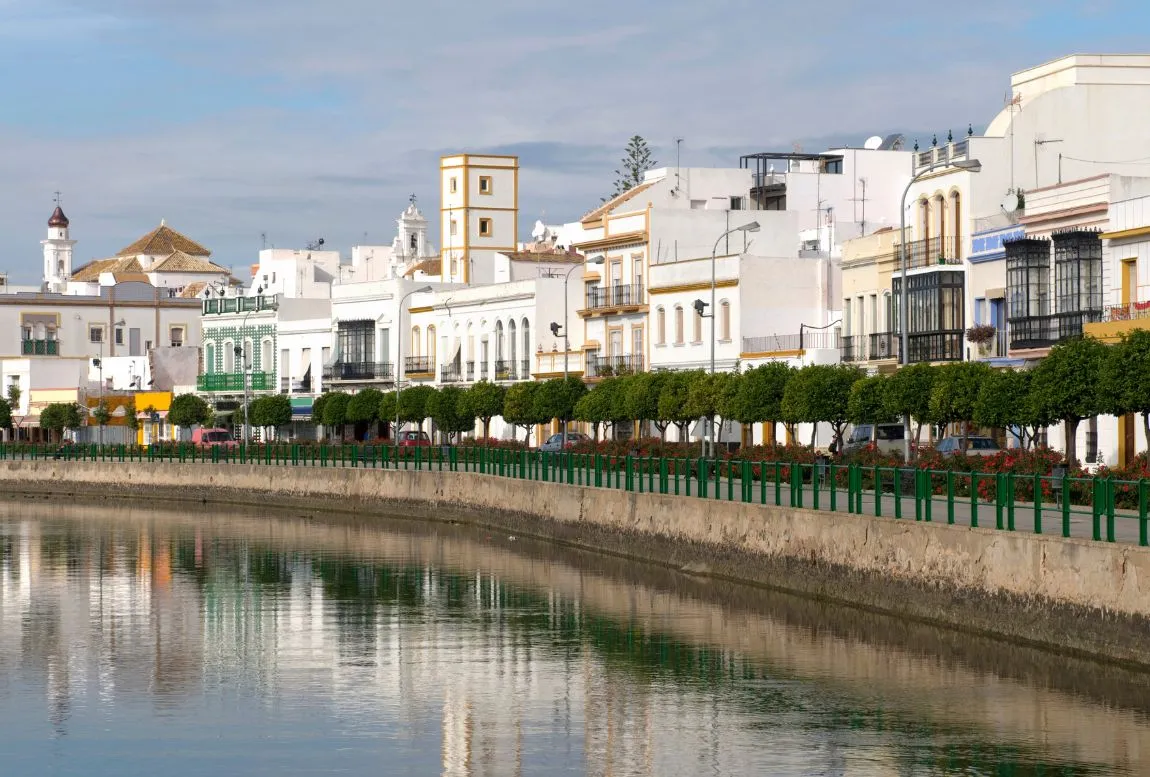
The house is in Ayamonte, a bright fishing town in Huelva, in the far south-west of Andalusia, where the Guadiana river marks the border with Portugal. In just a few minutes, by ferry or over the international bridge, you reach the Algarve: Vila Real de Santo António, Monte Gordo, Tavira, Faro. Close by are the beaches of Isla Canela, the nature of the estuary and Doñana National Park.
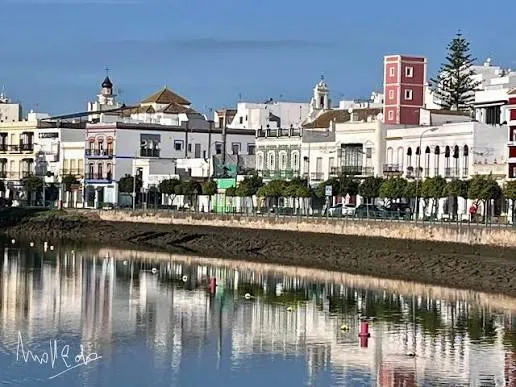
With a Phoenician and Roman past, Ayamonte thrived on the sea, as a fishing port and a hub of the fish-canning industry. That seafaring character is still alive in its old town of white streets, its churches and its squares. Today it blends that authenticity with a quiet life: morning markets, tapas by the port and sunsets over the Guadiana. A place with everything at hand, beach, nature, Spain and Portugal, and the unhurried pace of border towns.
The weather
Ayamonte enjoys an exceptional climate, with over 3,000 hours of sunshine a year. Summers are warm and sunny, with highs of 28–32 °C softened by the Atlantic breeze; and winters are very mild, around 16–18 °C during the day. You can enjoy being outdoors, the beach and the terrace almost all year round.
See the weather now+
Loading the weather…
The town
Ayamonte is a fishing town with centuries of history, of white streets, palm-lined squares with tiled benches, and a charming old town on the banks of the Guadiana. From the apartment you can explore it on foot along two lovely routes: one by the waterfront and fishing port, and another through the Barrio de la Villa, the oldest quarter. Tap “How to get there” to see both walks.
How to get there+
Along the waterfront and fishing port
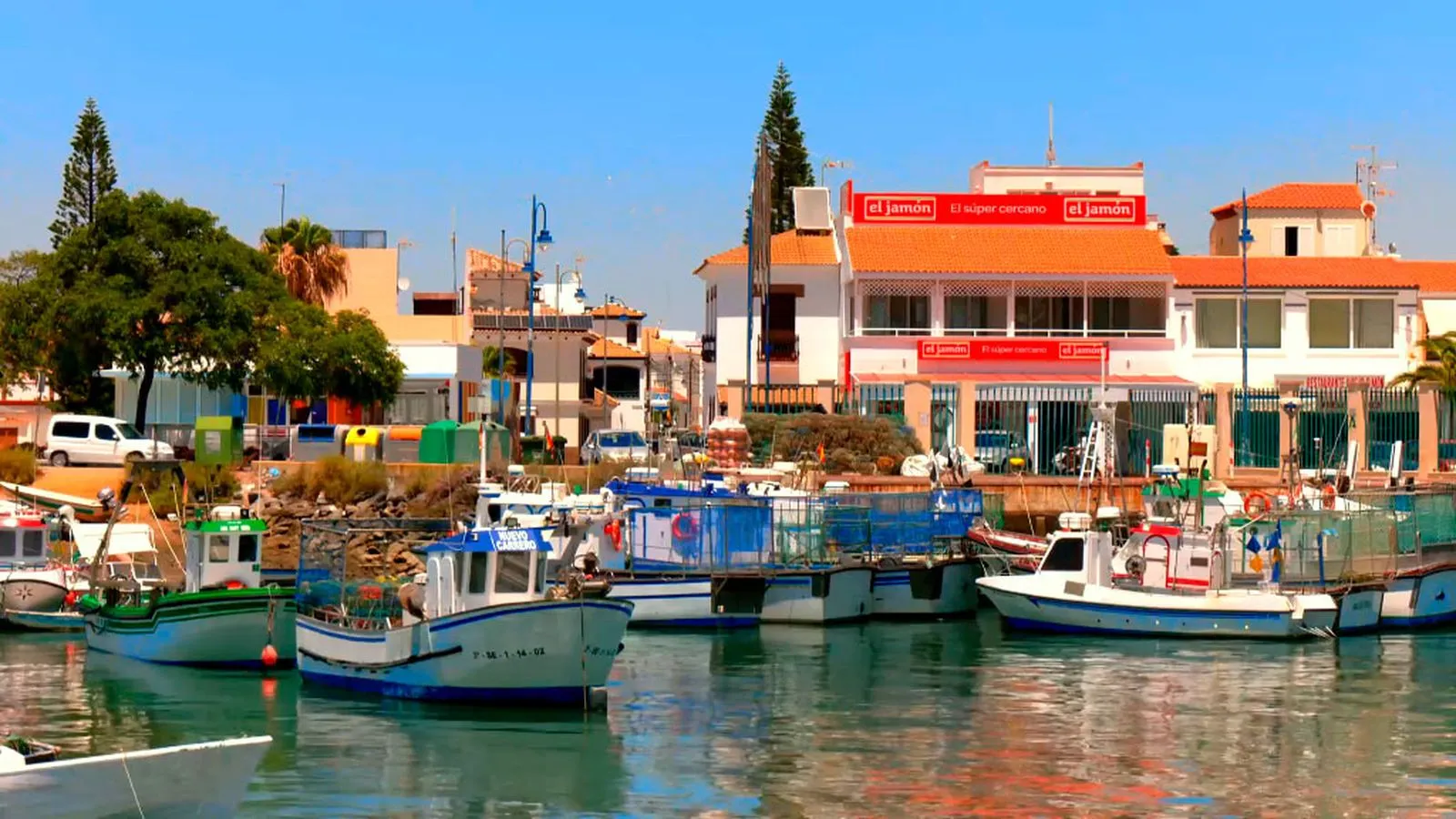
Going around the building and down Calle Navarra, in 100 metres you reach the promenade that runs along the bank of the Guadiana. Walking beside the river you reach the fishing port, seeing the boats and, on the other bank, the silhouette of the Portuguese towns (such as Vila Real de Santo António).
You soon reach the ferry departure point to Vila Real and, a little further on, the Mercado de Abastos (food market): a perfect spot for a morning stroll. It is the hub of local gastronomy, with the freshest fish and seafood straight from the Atlantic, such as the famous local tiger prawn.
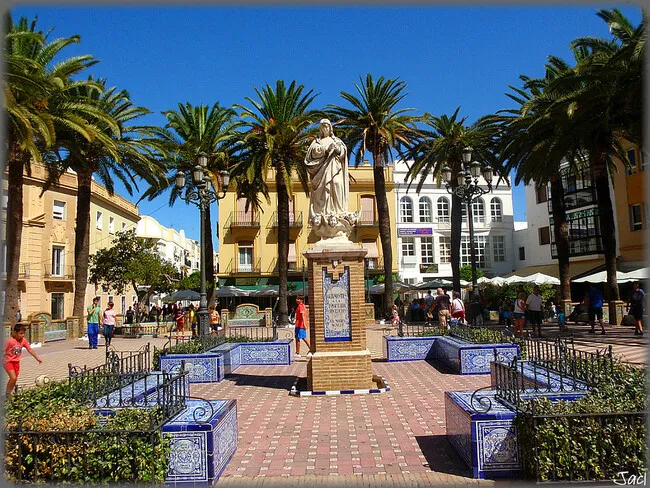
Heading into the old town you reach Plaza de la Laguna, the main square. Surrounded by palm trees and busy terraces, it stands out for its emblematic benches decorated with vivid tiles and the Monument to the Immaculate Conception. The Town Hall is also here. You can have a tapa at La Puerta Ancha.
Also in the old town you can see the Church of Nuestra Señora de las Angustias, an impressive 16th-century church with a colonial air, home to the town’s patron saint; and the Casa Grande, a majestic 18th-century mansion built by the Indies merchant Manuel Rivero, today a cultural centre with free art exhibitions.
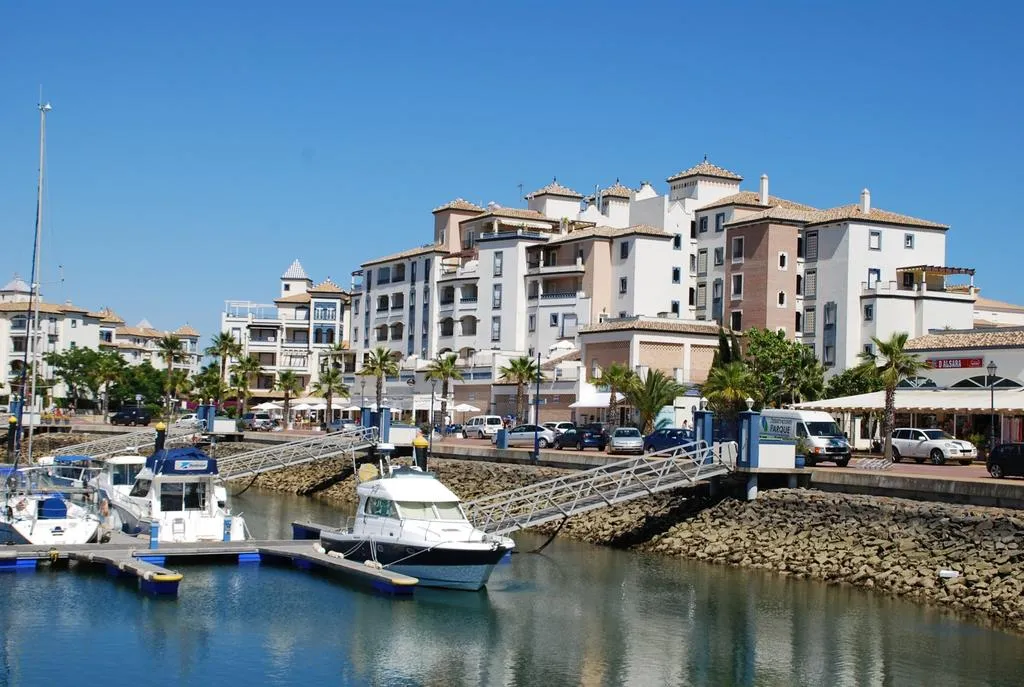
Through the shopping streets you reach the Paseo de la Ribera, built under the influence of the renowned architect Aníbal González: a lovely pedestrian promenade full of palm trees and Sevillian tiled benches, the favourite meeting point of locals for a sunset stroll. Opposite is the marina, where you can have a tapa at Mercajamón.
This area has several restaurants worth visiting, listed under “Eat & drink”: Conventus, LPA, Cristina Moreau, Tierra y Mar, Margallo, El Paladar, La Coquina and Tabanco La Peñita.
Through the Barrio de la Villa
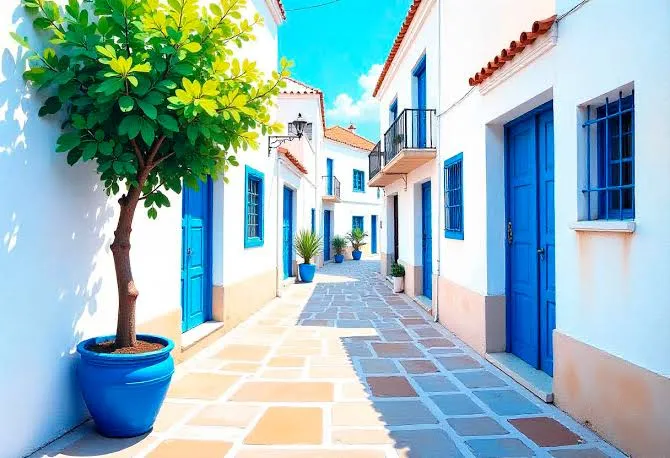
Leaving the apartment to the right, along Calle Islas Baleares, you enter straight into the Barrio de la Villa, the oldest and most characterful quarter of Ayamonte. It is a maze of narrow, cobbled streets with whitewashed houses and Andalusian patios full of flower pots. A real journey into the seafaring past.
Going up the first street on the left you reach the Church of El Salvador, at the highest point of the quarter: a beautiful 15th-century Mudéjar temple built on the foundations of an old mosque. From there you can carry on to the Parador (state-run hotel), with fantastic panoramic views of the river, the Guadiana International Bridge and Portuguese territory —very similar to those from the apartment terrace— with the added bonus of an aperitif.
Retracing your steps to Calle Islas Baleares, you can head down to the old town enjoying views of the river and the town, reaching Bar La Madrugá for a stop to enjoy a fantastic Iberian ham toast. Then you enter the centre, reaching Plaza de la Laguna, where you can continue the previous route.
The Algarve
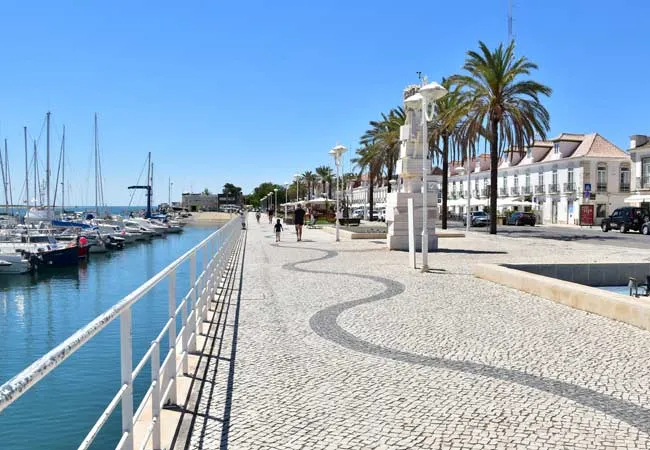
Across the river awaits the Portuguese Algarve, with its white towns, its beaches and its light. You can cross by ferry or by car over the International Bridge and discover corners with a special charm.
How to get there+
By ferry
A 7-minute walk from the apartment you take the ferry, which crosses the Guadiana and arrives directly in Vila Real de Santo António.
By car
Over the International Bridge, 3 km from the apartment, you reach the Algarve: Vila Real, Loulé, Albufeira, Monte Gordo, Castro Marim, the beaches of Fuseta or Tavira. All of them places with a special charm.
Explore the Algarve+
Loulé
Its famous traditional market with Moorish architecture and a lively old town.
More information ↗Albufeira
The Algarve’s biggest tourist destination, with its fishing port, beaches and atmosphere.
More information ↗Castro Marim
A town with an imposing castle and protected marshes, overlooking the Guadiana.
More information ↗Fuseta beach
A beautiful corner of the Ria Formosa, with sand, dunes and calm waters.
More information ↗Tavira
One of the loveliest towns in the Algarve, with its Moorish castle, churches and Roman bridge.
More information ↗The beach and surroundings
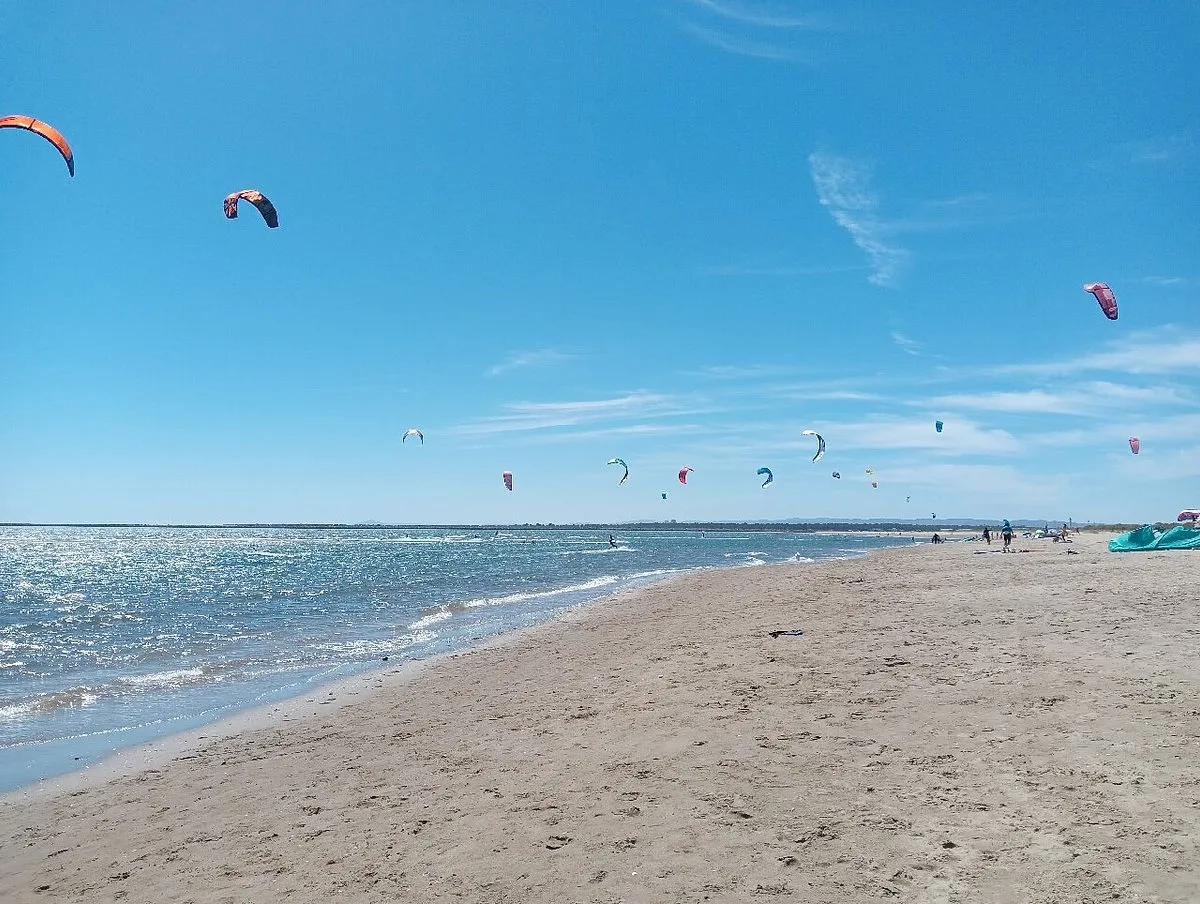
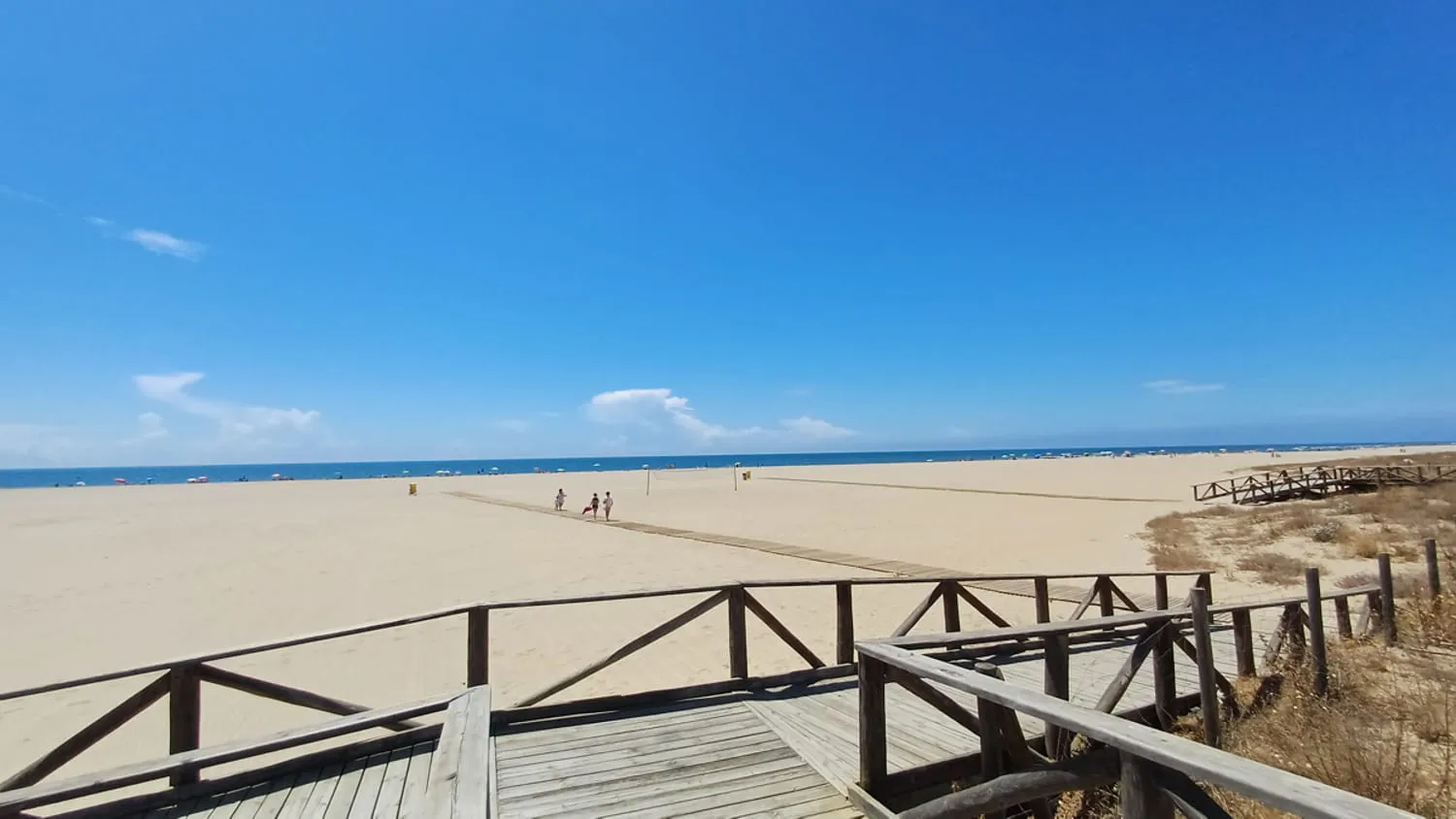
8 km away are the beaches of Isla Canela, miles of fine sand open to the Atlantic. Over the international bridge you can also reach the Portuguese beaches, the closest being Vila Real —wilder and surrounded by forest— and Monte Gordo, more urban and developed.